

A quiet question.
A moment of clarity.
When in great doubt, consult your own heart first.— Book of Documents
Draw an oracle lot
Connecting to the verse library…
One lot to help you think it through
A verse will not decide for you. It offers a way to look at the matter: where you stand, what you can build on, what to watch for. Before you draw, settle on the one thing you most want to understand.
Good questions to bring
- Should I take this opportunity?Career · timing and judgement
- Where is this relationship going?Love · closeness and boundaries
- Should I spend this money?Money · choices and restraint
- How do I prepare for this exam?Study · method and mindset
- I have felt uneasy latelyPeace · support and steadiness
- Not sure what to ask?Read how to frame a question, then draw
How the lots are read
- The original verse
Lot number, title and verse appear as in the traditional edition, unchanged; the basic reading is free.
- Line by line
The deep reading explains each line in plain words before answering your question.
- No scare tactics, no promises
A low lot is not doom and a high lot is no guarantee. We stay with what the verse says and what you can do.
A guide to drawing and reading oracle lots
From framing a question to reading a verse, make a quiet pause a chance to think through your situation.
This site uses the 100 Wong Tai Sin lots. Original verses, basic commentary and AI readings are shown separately. The guide introduces their cultural context and reading methods.
Drawing a lot and reading it
Drawing a lot begins with a question and the selection of a numbered lot. Reading it involves looking at the corresponding verse, its imagery and its interpretation in relation to your situation. The number is a reference for finding a text; on its own, it does not describe what will happen.
An online interface offers a space to pause and consider a concern. A useful starting point is to distinguish the original text, the reader's interpretation and your own judgment. Consider which ideas come from the verse and which still need to be checked against real information.
Start with one question
Bring one concern to mind
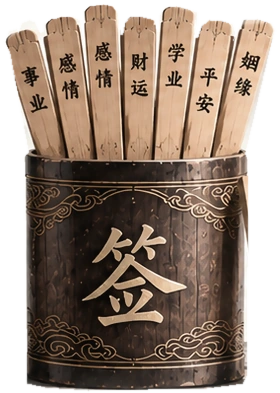
Think of one concern, then choose the category that fits. There is no need to enter a question or personal details before drawing.
Choose the closest category
Choose Career, Love, Wealth, Study or Wellbeing. A workplace collaboration question may fit Career; communication with a partner may fit Love. The category gives the question a focus rather than a certain answer.
Try the draw or number lookup
Draw from the 100 Wong Tai Sin lots, or enter an existing Wong Tai Sin number (1–100). Read the four original lines and the basic commentary. Source details are available on the lot’s public page.
Save the lot or read further
Sign in to save the lot. For a deeper reading, enter a question of up to 300 characters in the result page’s A closer reading section. AI generation requires the service to be available and your consent; refreshing does not generate again.
Five ways to frame a question
Career: describe the choice and conditions
For example: “I am considering a role that requires frequent travel. What should I find out over the next month?” Naming the choice and timeframe gives you more to work with than asking whether your career will go well.
Love: focus on what you can address
For example: “We keep disagreeing about how often to stay in touch. What should I clarify before our next conversation?” Describe your feelings, the disagreement and your hopes. A lot number cannot establish another person's feelings.
Wealth: look at budgets and responsibilities
For example: “An unexpected expense has come up. How can I separate essential spending from things that can wait?” Ground the question in actual income, expenses and choices. A verse is not a basis for investment trades, return forecasts or borrowing limits.
Study: connect the goal to your routine
For example: “My exam is six weeks away, and difficult questions keep interrupting my revision. What could I adjust?” Describe the goal, the difficulty and what you have already tried to identify changes to your study routine.
Wellbeing: explore everyday concerns
For example: “I have a lot on my plate and feel constantly tense. How can I make time for rest and family?” This category can help frame concerns about routines, care and daily plans. Physical symptoms or immediate danger call for appropriate help.
What to look for in a reading
Check the complete text and its source
Check the Wong Tai Sin tradition, lot number and four original lines before the basic commentary. Titles and verses use Simplified Chinese, with the Traditional Chinese source in the public lot page’s edition details. New basic commentary is fixed AI-assisted content, not yet individually reviewed by a human, and kept separate from the verse.
Separate wording, imagery and interpretation
Try paraphrasing the verse before considering its images of waiting, movement, encounters or change. Stories and plain-language commentary can aid understanding. Treat details that have no basis in the text with care.
Relate it to the question and choose a checkable step
Compare your reading with the original question, then identify a fact to check or a conversation to have. When you look back, keep actual events separate from your interpretation rather than attributing every change to the lot.
Identify the tradition first
Guanyin, Wong Tai Sin and other traditions
These names refer to different collections of oracle texts. When looking up a reading, start with the tradition named on the original slip or source page, then match the number, verse and edition before using a commentary.
The same number need not mean the same verse
A number has meaning within its own collection. This edition supports only the 100 Wong Tai Sin lots; numbers from Guanyin or other collections cannot be substituted.
Oracle lots, BaZi charts and compatibility
An oracle reading starts from a current question and a selected text. A BaZi chart starts from birth details, while compatibility considers two charts together. Reflecting on a present concern and exploring a birth chart are different activities.
Questions about online oracle lots
Does this page provide authentic verses and AI readings?
You can read all 100 Wong Tai Sin verses and our basic commentary. AI reading depends on availability shown on the result page and requires sign-in, a question and consent. Basic reading remains available when AI is disabled.
Do I need my birth details to draw a lot?
No. Oracle reading focuses on a present question and a verse. Birth details are used for BaZi and compatibility.
How should I phrase a relationship or career question?
Try the structure: what is happening, what I am considering and what I want to clarify. Focus on one issue and add a timeframe when useful. A concrete situation is easier to think through than a request for a good-or-bad verdict. You do not need to enter a question before drawing. For an AI reading, add your question on the result page, up to 300 characters.
Can I look up a lot I drew at a temple?
You can look up Wong Tai Sin lots 1–100. Check the original collection first: identical numbers from other traditions may refer to different verses.
Can an online lot accurately predict an outcome?
No. Grades are traditional labels. Verses and interpretations are for cultural exploration and reflection; decisions require facts and practical context.
Should I keep drawing if I dislike a result?
Avoid repeated draws to obtain a preferred label. Read the whole verse and separate reflection from fact. An unfavorable grade does not mean harm is inevitable.
Are draws automatically saved to my workspace?
Not automatically. An account record is created when you sign in and save, or confirm a deeper reading. Unsaved results stay in the current browser tab and expire after 24 hours.
Do these numbers belong to Guanyin or Wong Tai Sin lots?
This edition supports only the 100 Wong Tai Sin lots. Titles, grades and verses from a public reference dataset were checked against the official reference; new basic commentary is AI-assisted writing for this site, not yet individually reviewed by a human, and is not an official temple interpretation.
Start with what is on your mind
Choose a category, then draw a lot.
Oracle-lot culture and verse reading are for exploration and reflection, not a guarantee of future outcomes.